Texas 4-Year Statute of Limitations on Lease Debt
Texas has a 4-year statute of limitations on written contracts, including leases. What 'still owed but not suable' means and how to use it in negotiation.
Texas has a 4-year statute of limitations on written contracts, and apartment leases fall under that rule. This has meaningful implications for renters with older rental debt: it’s still owed, it still shows on reports, but it can’t be pursued in court after 4 years. Understanding this changes both your negotiation position and your community-targeting options.
The Texas 4-year statute in plain terms
Under Section 16.004 of the Texas Civil Practice and Remedies Code, a lawsuit on a written contract must be filed within 4 years of the cause of action. An apartment lease is a written contract. The cause of action for unpaid rent is the date payment was due and not paid (typically the date of default or the end of the lease term).
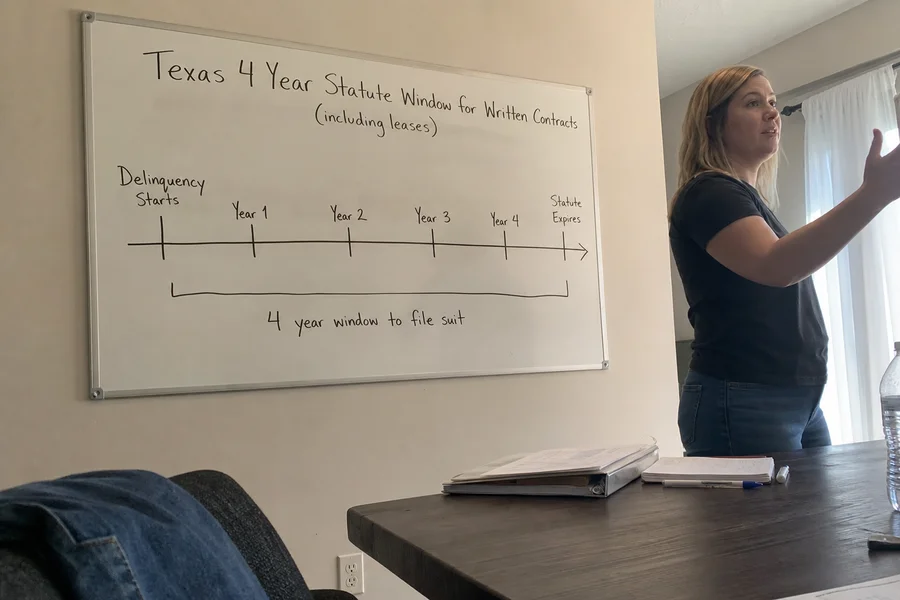
So a broken-lease balance from January 2021 becomes uncollectible by lawsuit after January 2025. From that point forward, if the community or an agency sues, the renter can assert a statute-of-limitations defense — and if it’s clean-cut, the suit will be dismissed.
”Still owed but not suable” — what it means
Passing the statute doesn’t extinguish the debt. Three things about it remain true:
1. It’s still owed. Morally and technically. You can still choose to pay it (though obviously you may choose not to).
2. It can still appear on your reports. Rental-history vendors retain records up to 7 years. Credit-report entries retain up to 7 years from original delinquency. The statute of limitations doesn’t erase records.
3. Collection activity can still happen. Agencies can still call, write, or otherwise attempt collection. What they can’t do is file suit and win in court.
The change is legal. Practical exposure shrinks — no lawsuit risk, no wage garnishment threat via judgment, no property lien. But the record and the debt itself persist.
How to use the statute in negotiation
If your debt is past or approaching the Texas 4-year statute, that’s real leverage in settlement negotiations. From the collection agency’s perspective, statute-barred debt is much harder to convert to cash — they can’t threaten a lawsuit, and many debtors know they don’t have to pay.
Practical negotiation approach:
1. Confirm the delinquency date from your documentation. Look at the original default date on your screening report or credit report.
2. Verify the statute has run. Add 4 years to the delinquency date and confirm it’s in the past.
3. Open the settlement conversation with a substantially reduced offer. Common landing spots for statute-barred debt: 20-40% of the balance, sometimes lower. The agency’s expected recovery on statute-barred debt is often near zero, so anything is often better than nothing to them.
4. Get everything in writing, including a “no re-age” clause. Don’t make any payment or verbal acknowledgment of the debt before the written settlement is signed — you don’t want to accidentally reset the statute clock through “acknowledgment of debt.”
The re-starting-the-clock trap
A key thing to know: partial payment or written acknowledgment of the debt can restart the statute clock under some interpretations. Once you make a payment or send a written acknowledgment that you owe the debt, the clock potentially begins running fresh.
That’s why negotiating in writing, from a position of “I’m considering settlement of this statute-barred debt without acknowledging ongoing obligation,” is important. Consult a legal aid organization or an attorney if the stakes are meaningful — the interpretation of what constitutes “acknowledgment” in Texas has nuances.
How communities treat statute-barred debt
Some communities treat statute-barred rental debt as functionally resolved for their scoring — the reasoning being that if the debt can’t be pursued, it doesn’t represent ongoing risk. Others weight it the same as any other unpaid debt.
Our agents know which Texas communities treat statute-barred debt favorably. That’s one of the paths that opens up for renters with older unresolved balances.
When to consult a legal aid resource
Texas legal aid organizations (Legal Aid of Northwest Texas, Lone Star Legal Aid, etc.) offer free consultations for eligible renters. If your debt situation is complex — multiple accounts, disputed amounts, ongoing collection contact — a free legal consultation can clarify your options before you engage.
Related reading
Frequently asked
Can I be sued for broken lease debt after 4 years in Texas?
Generally no. The Texas Civil Practice and Remedies Code § 16.004 sets a 4-year statute of limitations on written contracts, including apartment leases. Suit filed after 4 years is subject to a statute-of-limitations defense.
Does the debt disappear after 4 years?
No. The debt is still owed and can still appear on rental history and credit reports. The statute limits suit, not the record. Collection activity can still occur — just not court action.
Can I use the statute to negotiate a settlement?
Yes. It's real negotiation leverage. Once past the statute, agencies often accept lower settlements because they can no longer sue. Our agents advise on how to use it.
Turn this into a placement.
Our agents will match you with Texas communities that fit your specific scenario.