Can I Rent With a Broken Lease Under 2 Years Old?
Yes, it's possible. A recent broken lease is the hardest scenario, but some Texas communities conditionally approve. What makes a recent break placeable.
We know that searching for a broken lease under 2 years apartment often feels like hitting a brick wall.
This specific timeline remains the hardest scenario in the leasing industry.
Fortunately, high Texas vacancy rates in 2026 force many property managers to reconsider strict applicant rules.
Our team routinely spots communities that secretly keep a manual, case-by-case review path open for recent-break applications. These properties never advertise this policy publicly.
Finding these specific management companies and applying with the right documentation is exactly the recent broken-lease service we run every single day.
We will break down what makes a recent break placeable and what to expect if a property approves you. This guide also explains how your odds shift depending on paid versus unpaid balances.
What makes a recent break placeable
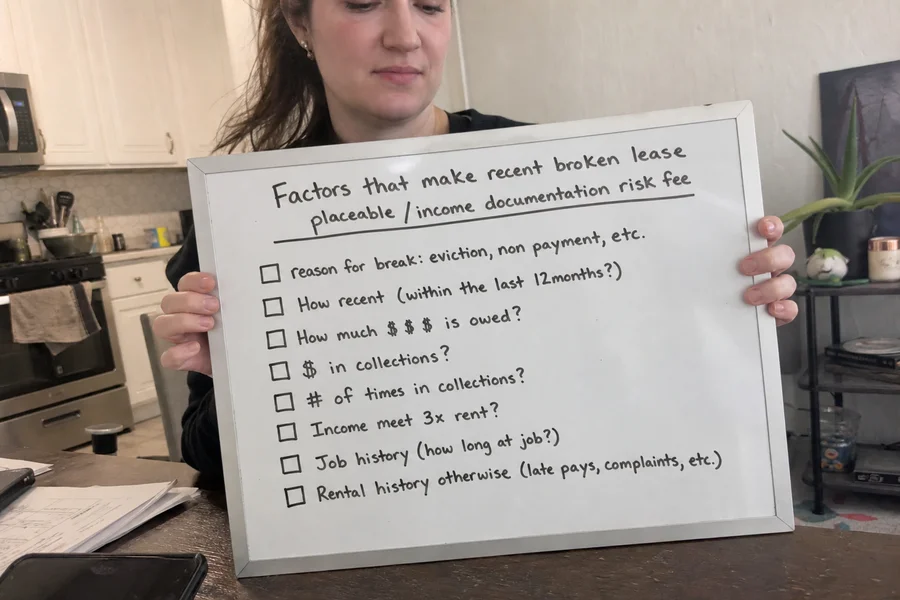
A recent break becomes placeable when you provide documented proof of strong income, a clear balance status, and a willingness to pay extra fees. Property managers view past lease breaks as a massive financial risk. You must offset that risk with undeniable financial stability.
Our experience shows four specific factors move a recent-break application from an automatic denial to a conditional approval.
1. Documented Strong Income (3x to 4x Rent)
Recent-break applications almost always face a higher income barrier than standard applications. Where a normal applicant might clear the hurdle at three times the rent, a recent break often requires a 3.5x to 4.0x multiplier.
We always remind clients to check the local market math. For example, the average rent in Dallas hit $1,350 in May 2026. A property demanding a 3.5x multiplier means you must show $4,725 in verified monthly income to get considered.
Our advisors tell applicants to prove this income with rock-solid documentation. You must prepare the following items:
- Recent, consecutive pay stubs
- Official employment verification letters
- Three months of verified bank statements
2. Transparent Balance Status
Property managers pull your file through third-party screening tools like Experian RentBureau. Trying to hide an unpaid balance simply does not work. The community will see the debt on the screening report immediately.
We recommend providing your paid-in-full letter or settlement agreement right alongside your initial application if the balance is resolved. Texas Property Code Section 92.3515 requires landlords to provide their tenant selection criteria in writing. You should request this document upfront to see exactly how they handle past balances before paying a non-refundable application fee.
3. Willingness to Pay a Risk Fee
Most conditional approvals for a recent lease break include a mandatory, one-time risk fee. These fees vary by property management company, but generally follow a set pattern:
- Low-tier risk: $200 to $300
- Mid-tier risk: $400 to $600
- High-tier risk: $800 to $1,000+
We strongly suggest deciding quickly whether to accept this fee and sign the lease. The property will simply revoke the conditional approval if you refuse the charge.
4. A Concise Letter of Explanation
Some Texas communities require a written letter explaining the circumstances of your broken lease. You need to keep this document brief, factual, and free of emotional over-explaining.
Our team coaches applicants to state what happened clearly, explain what changed, and highlight their current financial stability. Detailed examples of this process live in the letter of explanation guide.
The paid vs unpaid split
Your placement options expand significantly when your broken lease balance is paid in full. Communities that automatically deny an unpaid recent break will sometimes approve a paid one. A resolved balance signals financial responsibility and directly reduces the property’s perceived risk.
We often help clients weigh the timing of paying off these balances. Sometimes settling the debt first widens the applicant pool enough to justify waiting a few weeks.
Deciding When to Settle
Other times, you need to move immediately, and waiting to settle the debt costs you your timeline. The decision comes down to your immediate housing needs versus your available cash.
| Balance Status | Approval Odds | Placement Pool | Typical Requirement |
|---|---|---|---|
| Paid in Full | Much Higher | Broad | Proof of payment/settlement letter |
| Unpaid | Very Low | Extremely Limited | Must settle or seek manual review properties |
We walk through that decision with you directly to figure out the most strategic move. A strategic approach prevents wasted application fees at properties that will automatically reject unpaid accounts.
What “conditional approval” actually looks like
A conditional approval usually means you must pay a higher security deposit, a one-time risk fee, and prove a higher income multiplier. The property management company uses these financial requirements to shield themselves from potential losses.
Our recent data shows that Texas standard security deposits usually run between $150 and $500. Under a conditional approval, properties often raise this deposit to equal 1.5x or 2.0x the normal amount, sometimes reaching a full month of rent.
The True Cost of Moving In
Not every community layers all three requirements together. Some skip the explanation letter entirely, while others drop the extra deposit but raise the income bar in exchange for a lower fee.
We tell clients to prepare for move-in cash on a $1,500 apartment to run between $4,000 and $6,000. This total usually includes the following upfront costs:
- Your first full month of rent
- The elevated security deposit
- The one-time risk fee
- Standard application and administrative costs
You also need to watch out for late payment penalties after moving in. Texas Property Code Section 92.019 allows landlords to charge late fees only if rent is unpaid for two full days. Setting up auto-pay is a smart move, as two late fees on a 12-month lease can quickly erase any move-in specials you received.
People often ask us, can I rent with a recent broken lease without wasting money on application fees? The answer is yes, provided you target the right communities. We invite you to reach out to our placement team today to start your targeted apartment search.
Related reading
Frequently asked
Is a broken lease under a year even possible to place?
It's the hardest scenario, but flexible-screening communities and risk fees make it possible. Expect a higher income bar and non-refundable risk fee at the communities that will consider your application.
Does paying help a recent break?
Often yes. Paying widens the pool of communities that will consider you, and documented payment can eliminate the risk fee at some. But timing matters — if move-in urgency is high, applying now to friendly communities may be smarter than settling first.
What income do I need?
Recent breaks often require 3x-4x rent for conditional approval. A guarantor or co-applicant can bridge the gap at communities that accept them.
Turn this into a placement.
Our agents will match you with Texas communities that fit your specific scenario.