Broken Lease vs Eviction: What's the Difference on Screening?
A broken lease is a balance owed; an eviction is a court judgment. See how each reports and why a broken lease is usually more placeable.
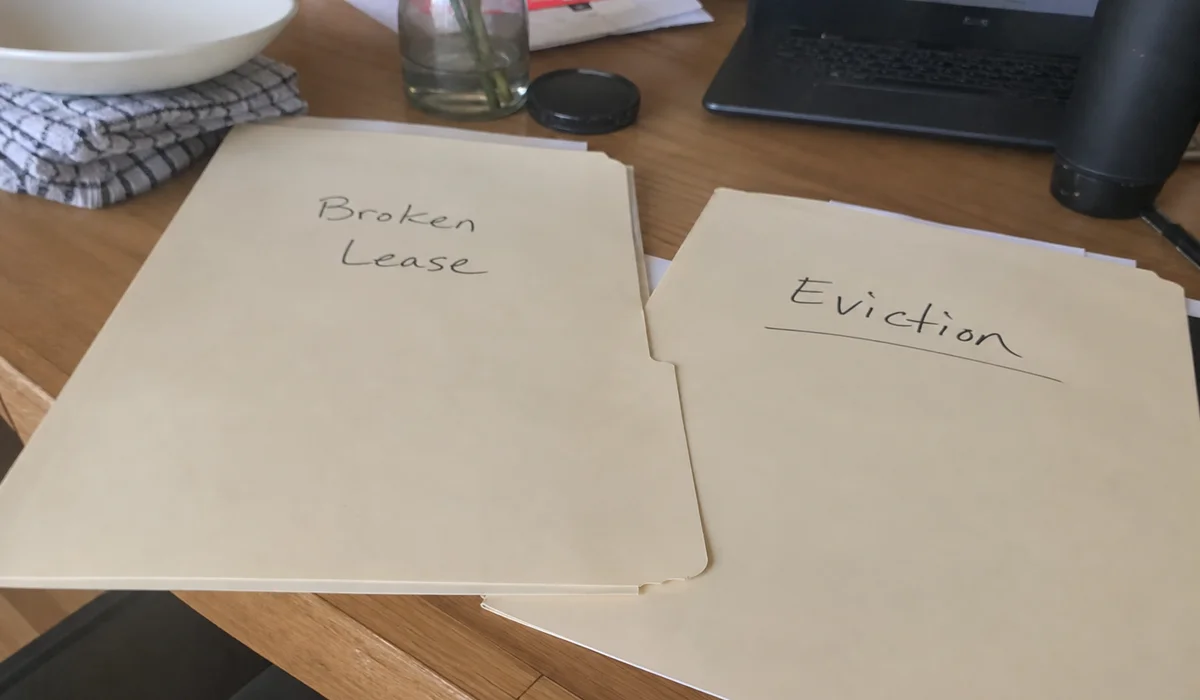
Our team sees this confusion every day when reviewing rental applications and screening reports. The line between leaving a property early and being formally removed often blurs for both property managers and prospective tenants.
Many people know that a broken lease and a court eviction feel identical in the moment. Our experience shows that understanding the broken lease vs eviction difference is the exact key to picking the right placement path or approving the right applicant.
The reality is that these two records get scored entirely differently on paper.
Let’s break down the core differences, examine how the data reports in 2026, and explore practical solutions for handling both.
The core distinction
You might ask, is a broken lease an eviction? We define a broken lease primarily as a balance owed to a property.
A tenant left before the lease term ended, and the community assessed rent, damage, or fees against the account. These records indicate that this balance might eventually go to collections. Our analysts track the debt in rental-history screening and on a standard credit report if a collection agency buys it.
Legal definitions classify an eviction strictly as a court judgment. The landlord filed a civil suit, the court heard the case, and a judge issued a ruling in the property owner’s favor. Our data highlights that this court record exists in the county civil records regardless of whether the debt gets paid.
Understanding this distinction requires looking at two hard facts:
- Average cost: A 2026 Snappt analysis reveals a standard eviction costs a business owner around $3,500.
- Reporting length: Our team notes that the Fair Credit Reporting Act (FCRA) allows court eviction filings to remain on a public record for up to seven years.
Property managers check these specific eviction records completely separate from standard credit scores. Many communities use specialized eviction-search products bundled into screening suites like SafeRent or LeasingDesk.
Our evaluations show these tools pull county civil court records directly. An eviction is visible as a formal court event, not just a balance-owed line item.
How each reports

We see a massive difference in how these two events appear on a background check. A standard broken lease or eviction screening process determines whether an applicant gets approved or automatically denied. Specific data points dictate this reporting structure.
| Reporting Source | Broken Lease | Eviction |
|---|---|---|
| Rental-History Screening | Shows former community, balance, and dates via NCAC, LeasingDesk, SafeRent, or Experian RentBureau. | Often shows both the balance owed and the formal eviction event. |
| Credit Report | Shows collections account, agency, and balance only if sent to collections. | Any balance that went to collections shows here alongside standard credit history. |
| Court Records | Shows nothing since no lawsuit was formally filed. | The eviction judgment is a matter of public record in the filing county. |
Business owners and managers must understand that an eviction leaves a permanent public court trail. Our team always warns clients that a TransUnion SmartMove ResidentScore will heavily penalize an applicant for an eviction record.
A broken lease is simply much easier to explain or dispute. Former tenants can pay, settle, or document a broken lease as resolved.
We observe that court systems handle eviction judgments differently because the filings stay on the record indefinitely. Expungement or sealing is possible in some Texas counties, but it is never a routine process.
Why a broken lease is generally more placeable
You will find that communities keeping a case-by-case review path for broken leases often refuse to do the same for evictions. A court judgment reads as a definitively bad prior tenant in a way that a standard debt balance does not.
Our team regularly sees communities with flexible policies apply an eviction-specific denial rule alongside their broken-lease review rule. A full 84% of property owners rank payment problems and evictions as their top concerns according to 2026 TransUnion research.
Automated screening tools evaluate these records using strict criteria:
- Eviction triggers: Hard denials occur without human review.
- Broken lease triggers: Our data shows manual reviews are often allowed for settled debts.
Different placement strategies apply to these two unique situations. The placement pool for an eviction is simply much narrower and requires finding properties that do manual underwriting.
We run a process for a broken lease that involves working vendor-mismatch angles, gathering documentation, and targeting case-by-case-friendly communities.
What to do if you have both
Renters sometimes face a situation with both an eviction and a balance sent to collections. Both records exist simultaneously on a screening report. We frequently encounter this combination during application reviews.
The eviction is always the primary constraining factor in these dual scenarios. Market placement pools remain severely limited by the court judgment, and then the balance status determines your exact terms within that small pool.
Our team recommends a smart tactic: attempting a pay-for-delete negotiation with the collection agency to remove the broken lease debt entirely.
This targeted approach works best if you face this double-record dilemma. Build 1 scope guidelines mean the current focus remains exclusively on broken-lease-only placement.
We encourage you to start the free search to see your options if your situation is strictly a broken lease. Properties are harder to secure with a court record, so placement in this build is not possible if you have an eviction, but capabilities are expanding soon.
Practical takeaway
You should proactively pull a 3-bureau credit report if you are unsure of your exact record status. Another crucial step is to manually check for eviction records in the specific county where your former community was located.
Our top recommendation for Texas residents is to search the Justice of the Peace (JP) court filings, which are easily accessible online in most major metros. Experts advise requesting your specific rental-history screening report from a provider like Experian RentBureau.
These verification steps are critical:
- Check local courts: Texas residents should search the Justice of the Peace (JP) court filings online.
- Verify data accuracy: Our experts see this simple verification step rule out a massive amount of confusion and wasted application fees.
The right information empowers you to make better financial decisions. Clear understanding of your file dictates your entire placement path.
We are ready to help you plan the next steps once you have that clarity, so reach out today to review your options.
Related reading
Frequently asked
Is a broken lease the same as an eviction?
No. A broken lease is a debt owed to a former community; an eviction is a court ruling. They report differently and are treated differently in screening.
Which is harder to rent with?
An eviction is generally harder. There's a court record that many communities treat as an automatic decline, whereas a broken lease is a balance that many will review case-by-case.
Can you help with both?
Our current focus is broken-lease placement (the Build 1 scope). Eviction-friendly placement is a separate service line handled elsewhere.
Turn this into a placement.
Our agents will match you with Texas communities that fit your specific scenario.